The US economy has taken some hits over the last several years. Reverberations, most notably from the aftermath of a global pandemic and major decisions of two opposing administrations, have been felt by Americans every day at the gas pump, in grocery stores, and through the job and housing markets. Frustrations and concerns are voiced daily in conversations and the media. But how bad is the economy really doing? And what can we expect in the near future?
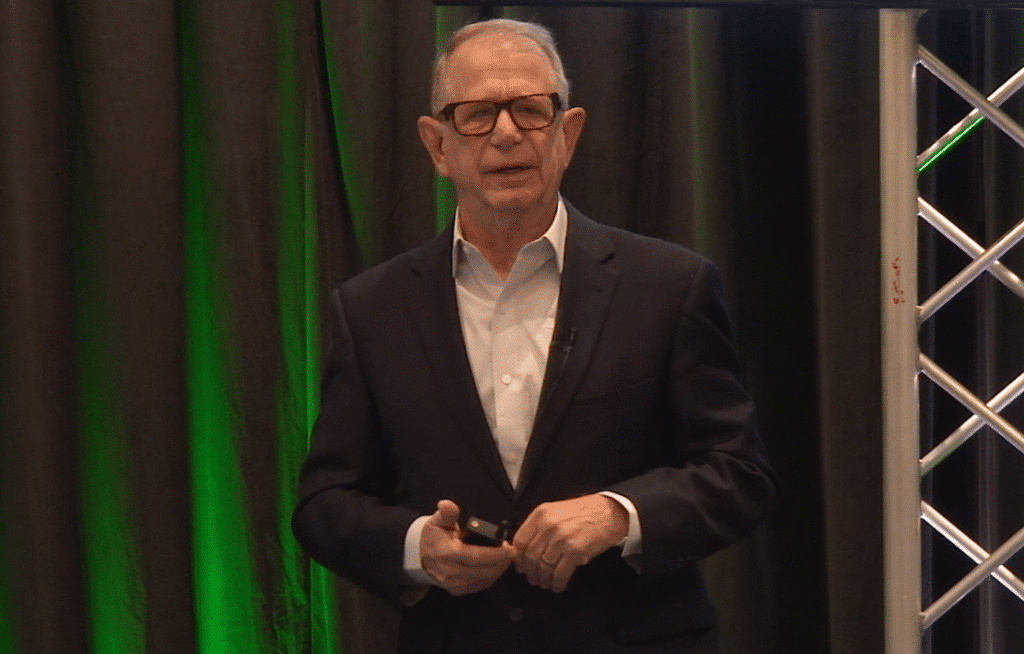
Stuart G. Hoffman, Senior Economic Advisor at The PNC Financial Services Group, provided an answer to these questions at GYF’s annual CPE day. His presentation took place the day after the official end of a 44-day government shutdown, the longest in U.S. history. Relevant job, CPI, and GDP data was not being collected during this time, requiring Hoffman to work around a hole spanning almost half of Q3. Drawing upon his years of expertise in analysis and forecasting, Hoffman analyzed several economic components to structure his predictions. He did his best to leverage the information available and noted that his predictions could be altered as more data from the shutdown period is released.
Hoffman introduced the concept of the “K economy” to describe the current landscape in the United States. He explained that the letter K is a visual representation of the distinct socio-economic divide among Americans. The top one third are homeowners and stock owners who use their disposable income on purchases such as vehicles and enrichment for their children. The bottom two thirds, on the other hand, can only dream of owning homes, are struggling with debt, and do not have excess cash to invest. Many of these Americans are dependent on welfare programs, such as SNAP. Hoffman noted that several economic factors are exacerbating this K duality.
Next, Hoffman discussed how U.S. economic growth has slowed and the GDP has shrunk, yet it remains larger than the rest of the world by over $10 trillion. He emphasized that due to its relative significance, the economic conditions and decisions in the United States have global ramifications. He noted that the overall world economy is growing, and the global supply chain has rebounded since the disruption from the COVID-19 pandemic. However, the tariffs imposed by the United States have been a particular concern for both Americans and foreign nations. Some tariffs are being passed through to consumers, but Hoffman noted that the impact has not been as severe as initially expected. According to Hoffman, the United States maintains an average tariff rate of 11% and collects $32 billion in tariff revenue per month. Despite this income from tariffs, the national debt continues to increase, further fueled by tax cuts. Hoffman asserted that tariffs are also contributing to inflation domestically and globally and noted that we can expect the U.S. dollar to continue to weaken against most foreign currency.
Inflation remains a prominent and growing challenge to Americans, as rising prices outpace wage increases. Hoffman stated that over the last six years, prices have increased by 25%, but wages have only increased 23%. Food and gas prices have come down slightly, though home prices continue to soar – currently they are up 40% from before the pandemic. Hoffman explained that as a result of the high prices, the housing market has flatlined, with both new and existing home sales remaining stagnant. Rising interest rates have exacerbated this situation, as existing homeowners prefer to remain locked into their low mortgage rates rather than dealing with a much higher interest rate on new financing. According to Hoffman, the increase in housing prices is slowing and moderate appreciation is expected.
Like inflation, unemployment is also on the rise in the United States. The unemployment rate has increased and job growth has slowed, and according to Hoffman, this trend is expected to continue. He cited the significant number of layoffs of government employees and mass deportations as the primary causes for this trend. About 1.5 million foreign-born employees have been deported over the last six months, however, the number of domestic employees has increased and continues to grow. Non-manufacturing sectors, notably education and healthcare, comprise 80% of the economy and are adding most of the available jobs. Manufacturing is currently in a flat period. In order to have a booming economy, Hoffman explained, the manufacturing industry must get back on track.
Despite the difficulties, the United States is not in a recession, and Hoffman believes one to be avoidable. He noted that this outlook can be impacted by policy changes and the turnout of this year’s holiday season. He expects economic growth to continue, but not as rapidly as the years immediately following the pandemic. The economy has seen better days and the outlook isn’t amazing, but it could be much worse. Many Americans are doing fine, despite the challenges. Hoffman explained that people love to complain, so their actions, rather than their words, are the true signals of the economic state.
Click here to access copies of the slides, links to resources and a video of the presentation
About GYF’s CPE Day: The firm presents this program each year to bring together clients, friends of the firm, and other professionals who are interested in gaining knowledge. The day is always filled with interesting presentations and great networking opportunities, and is generally attended by 300+ guests. If you have any questions about the material covered, or other issues we did not have time to address, please reach out to your GYF Executive or contact the office at 412-338-9300. We look forward to seeing everyone next year!