Before my internship began, I read the description of what would be expected from the interns. According to the description, an audit intern will work with other members of the professional staff in the audit department on financial statement preparation, accounting services, pension plan audits, and not-for-profit reporting. Interns should also expect exposure to other services offered by the firm including tax planning and compliance, and management consulting. This gave a helpful baseline for what I would be working on, but until I stepped into the office, I would not fully understand how those concepts would translate into the work.
Let us rewind back to the first week of June 2026 for GYF Intern Orientation. Throughout the week, the audit interns learned a whole array of different topics, tools, and software we would use the next ten weeks. However, the one statement that stood out to me is that we will be treated as Staff 1, but what does that truly mean? In the world of internships, there is a stereotype out there that interns only do the miscellaneous demanding tasks of getting coffee for the office or scanning hundreds upon hundreds of documents.
Yet, from day one, I could tell that I was going to learn something new every day
and be able to apply and expand my classroom knowledge
I was very excited to finally gain real world experience, but I was also very nervous because I would be dealing with real situations and not just case studies from a textbook. On my first official day of being an audit intern, I was entrusted with client work. For each client, my engagement team explained the tests I would be performing, and how to make selections. No matter which client I was working on, team members repeatedly encouraged me to ask questions and request help when needed.
I was able to use what I learned in my audit class at Pitt-Greensburg and apply it to testing controls. Throughout the work, I saw how audit assertions such as completeness, existence, and cutoff apply to real situations. The biggest difference between classwork and fieldwork is that classwork gives you a defined structure, whereas fieldwork requires you to adapt. No two clients have the same circumstances, so being able to apply the theory into the field is valuable. In both coursework and fieldwork, auditors are reminded again and again to remain skeptical. Professional skepticism is your best friend!
When students think about public accounting, they may picture someone
sitting in a cubicle all day – this is untrue for auditors!
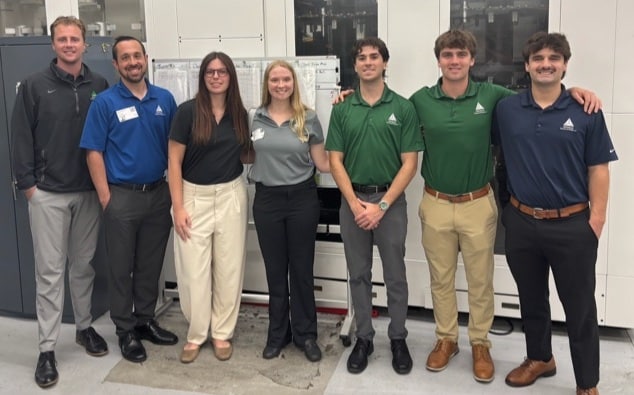
For some of the clients I served, I had the opportunity to work on site, and I believe this was the most beneficial aspect of the internship. It is important to understand why auditors perform test work and how to complete work papers successfully, but visiting a client adds another layer of understanding. Sometimes there can be a disconnect between the client and what the numbers actually represent. I have often heard that accounting is a picture of the financials behind the scenes, and these visits helped me put a face to that picture. Even simply seeing a facility can show where materials are organized and how internal controls operate in person.
Another highlight of this summer was having the chance to interact with a wide range of individuals, from Staff 1 employees to Managers. Because I worked with someone new each week, I had many opportunities to absorb new tips and tricks. There were also a few times when I was able to share my own Excel shortcuts or show someone how to complete a task within the software. No matter who I worked with, I never felt unaware of what I needed to do. Everyone at GYF was welcoming, and they constantly emphasized that there is no such thing as a dumb question. Many employees had also worked as interns at GYF, and hearing about their experiences helped me understand how they overcame some barriers and grew in their careers.
As I began to wrap up my summer internship at GYF, I fully understood what it meant for interns to be treated as Staff 1. We were nowhere close to being one of the stereotypes I had heard before. Working at GYF this summer solidified my passion for accounting. It is one thing to learn all the material in class, but being able to apply it is a vastly different experience. Each morning, I was excited to start my day and begin my test work. I am incredibly grateful to have had an opportunity to work at GYF, and I truly cannot wait to start my career in public accounting and begin taking the CPA exam within the next year!